
What makes a great leader in sport?
- Mar 4, 2015
- 5 min read
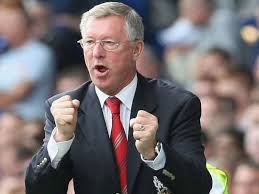
When you think of the great leaders in sport... i dont know if its just me, but i think of the likes of Jose Mourinho, Sir Alex Ferguson, Sir Clive Woodward etc. In all honesty the list could go on, also i think its important to consider the great captains in sport as well because they are in fact the 'leaders on the pitch', for example people like Steven Gerrard, Lawrence Dallaglio, Michael Vaughan and MS Dhoni. But what qualities and characteristics do all these great leaders possess, i mean they dont have superpowers DO THEY? (although sometimes i do think MS Dhoni does).
Firstly its important to consider what leadership actually is, before we can attempt to understand the qualities and characteristics of these leaders... "Process whereby an individual influences a group of individuals to achieve a common goal" (Northouse 2010, p.3) also.....
“The process of influencing others in a manner that enhances their contribution to the realisation of group goals” (Haslam, Reicher, & Platow, 2011, p. 247). Both these definitions summarise what leadership is nicley and provide an overview of the roles of these leaders within sport. Now its time to look at their qualities. For this part i have decided to use IN MY OPINION (say that in capitals because this statement will provide lots of individual differences) the greatest leader of all time in sport... Sir Alex Ferguson, and i will attempt to justify that last statement.
Firstly let's look back at his achievements in his career as a manger they are:
13 Premier league titles
5 FA cups
4 League cups
2 Champions league
10 Charity shields
All these he achieved at his time at Manchester United, so not even touching upon his time in Scotland.
But what made Sir Alex Ferguson such a good leader?... This question has been asked and researched extensively over the years, and as a result 5 major theories have arisen which all have like anything in psychology strengths and limitations.
The first theory is the oldest one GREAT MAN THEORY, this is the idea that the leader is born with the characteristics to be a great leader (e.g. its innate), they themselves believe they are superior beings. Let relate this to Sir Alex...
“Winning is in my nature. I’ve set my standards over such a long period of time that there is no other option for me—I have to win. I expected to win every time we went out there. Even if five of the most important players were injured, I expected to win.”. He doesn't want to win, he expects to win not matter what situation, and this is definitely a Great Man approach to leadership.
The next theory is the Multi-dimensional approach, this approach is heavily centred on 3 main aspects:
1) Required behaviour
2) Group preferred behaviour
3) Actual leader behaviour
An effective leader is able to take into account group ideas whilst still maintaining their own views, which is exactly what Sir Alex Ferguson was able to do, bearing in mind he has been able to manage some big characters such as Cristiano Ronaldo, Ryan Giggs, David Beckham and Wayne Rooney, these are all world class players, but just imagine the size of theirs ego's and being reprimanded or disciplined during a training session, but this was something Sir Alex was able to do.. and lets be honest he brought the best out of them (not being biased at all).
” An important part of maintaining high standards across the board was his willingness to respond forcefully when players violated those standards…Before I came to United, I told myself I wasn’t going to allow anyone to be stronger than I was. Your personality has to be bigger than theirs. That is vital.”
Transactional is the next theory, this is based on the idea that rewards and punishments are given out by the leader to his/her followers dependant on their performance. This theory also considers social exchange over time (e.g. that within a team there is a clear chain of command).
"Sir Alex knew he had a bunch of players there that were honest and he could trust, but he had to get the best out of them and he used kind of different tactics to get the best out of different players and if a cup had to go flying then it had to go flying. It certainly worked." Willie Miller
This shows that Sir Alex definitely used this theory and in his case it definitely had some effect on his players, whenever i think of this theory i always think of the Neil Warnock video when he was at Huddersfield Town. Now this isnt always the most effective technique, but it certainly gets the point across and certain personalities respond better than others.
The next few theories are the most recently presented ones in the field of leadership. The next one is Transformational this is all about being able to create interpersonal relationships between the leader and their players. Also creating that foundation of trust and admiration for the leader, this contributes linearly to performance and motivation, all of that is all said and good but one major aspect of the transformational approach is this emphasis on motivating followers to achieve an aspiring VISION...
This is something Sir Alex Ferguson must have had in order to achieve the things he did whilst at Manchester United. I mean in his autobiography he writes about the 'golden generation' of players like their his children and in that sense they kind of are... especially for the likes of Ryan Giggs, Gary Neville and Paul Scholes as they were at the club form youth level, all played in the first team and all retired at Manchester United, so just think of the relationship built up between those players over the years.
The last theory is Social Identity, this is the emphasis of achievement as a group, not as individuals. So creating a 'team' identity, kind of like 'we' not 'I' sort of thing within a group of players. This emotional connection allows the leader to successfully drive through his ideas within the team and is most certainly evident in the way Sir Alex structured his leadership style.
“I'm going to tell you the story about the geese which fly 5,000 miles from Canada to France. They fly in V-formation but the second ones don't fly. They're the subs for the first ones. And then the second ones take over - so it's teamwork.”
In summary i think what made Sir Alex Fegurson such a great leader was the fact that he was able to shape his leadership style so that it had a combination of all 5 of the theories mentioned. I think if Sir Alex Ferguson was a psychological concept he'd be the Diathesis stress model because that takes into account lots of different theories to form one effective theory. In the case of Sir Alex Ferguson it provided the world with one of the greatest managers of all time.
Thanks for reading
Hope you've enjoyed this...
Get involved on twitter if you'd like to see more @sport_psyched95 use #getpsyched
(Just to clear it up, i'm not a Manchester United fan haha, i actually support Birmingham City)


Comments